
What Is a DLL? What Is a DLP?
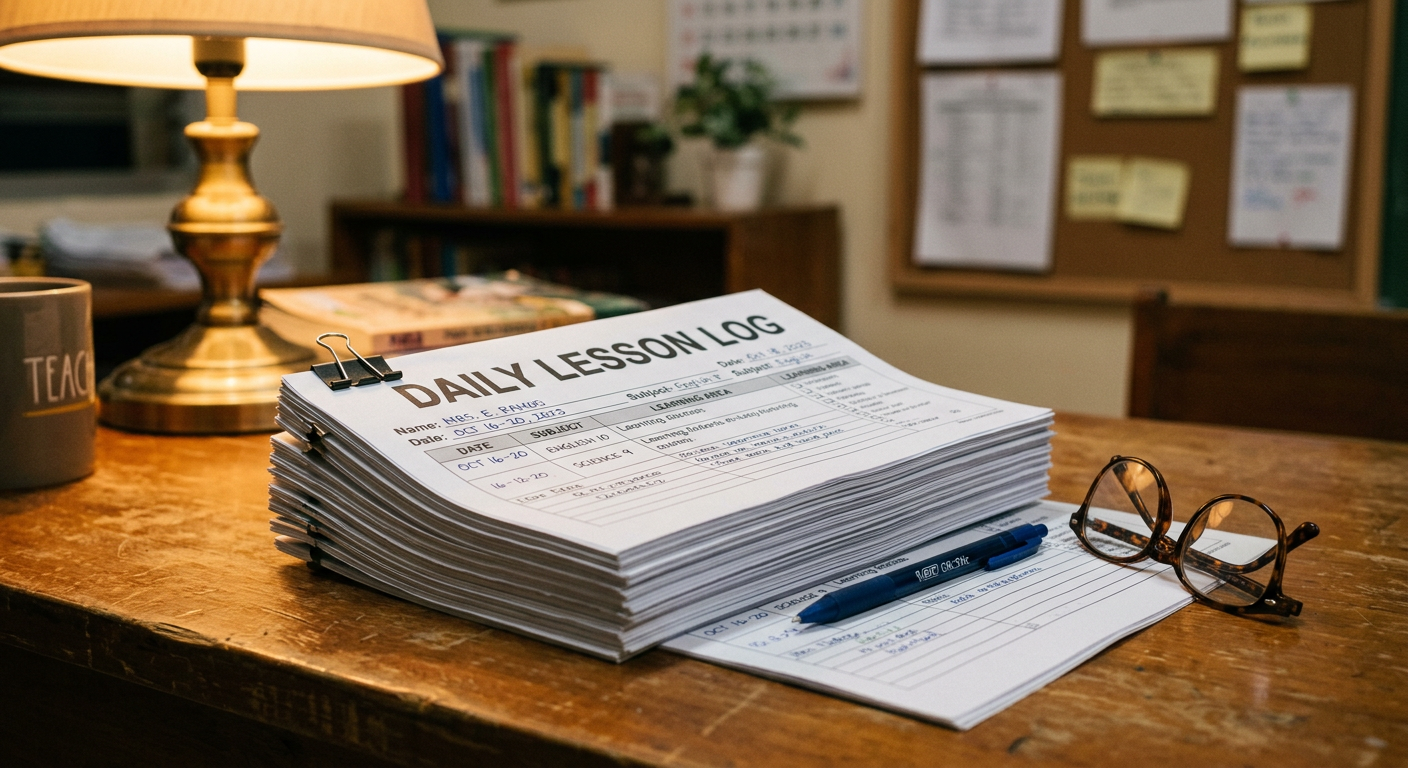
If you're a teacher in the Philippine public school system, you've definitely encountered the terms DLL and DLP. They've been part of every teacher's daily life for nearly a decade. But let's make sure we're on the same page about what they actually are.
DLL — Daily Lesson Log
The Daily Lesson Log (DLL) is a template used by teachers to document their daily lessons. It's a simplified format that outlines what you're going to teach, how you're going to teach it, and what resources you'll use. Think of it as a concise lesson roadmap.
The DLL was designed for teachers who already have classroom experience and are working with learning areas that have available Teacher's Guides (TGs) and Learner's Materials (LMs). Since these resources already contain detailed procedures, the DLL doesn't require you to write everything out step by step.
DLP — Detailed Lesson Plan
The Detailed Lesson Plan (DLP) is exactly what it sounds like — a more thorough, step-by-step version of a lesson plan. It includes detailed procedures for each part of the lesson, often following the 4As approach: Activity, Analysis, Abstraction, and Application.
The DLP was designed for newly hired teachers who don't yet have professional teaching experience. The idea is that a detailed plan helps new teachers stay organized and on track during their lessons.
DLL vs. DLP — Who Uses Which?

Under DepEd Order No. 42, s. 2016 ("Policy Guidelines on Daily Lesson Preparation for the K to 12 Basic Education Program"), the rules were clear:
| Format | Who Uses It | Requirements |
|---|---|---|
| DLL (Daily Lesson Log) | Experienced teachers | At least 1 year of teaching experience AND handling learning areas with available TGs/LMs |
| DLP (Detailed Lesson Plan) | New teachers | Newly hired teachers without professional teaching experience |
So if you're a teacher who has been in the classroom for at least a year and your subject has DepEd-provided materials, you use the DLL. If you're fresh out of college and just starting your teaching career, you use the DLP.
This distinction made sense in theory, but in practice, it created some confusion. Some schools required all teachers to use the DLP regardless of experience. Some divisions created their own modified templates. The result was a patchwork of formats across the country.
The Old Format Sections
Both the DLL and DLP shared a common structure, with the DLP being more detailed in certain areas. Here are the main sections that both formats included:
1. Objectives
This section outlines what students should be able to do by the end of the lesson. Objectives are typically aligned with the curriculum guide and the Most Essential Learning Competencies (MELCs). They include:
- Content Standards: What students should know
- Performance Standards: What students should be able to do
- Learning Competencies: Specific skills or knowledge to be developed
2. Content
This is a brief description of the topic or subject matter for the day. It's usually just a line or two — enough to identify what the lesson is about.
3. Learning Resources
Here you list all the materials you'll need for the lesson:
- Textbooks and page numbers
- Teacher's Guide references
- Learner's Materials
- Additional resources like worksheets, videos, or online materials
4. Procedures
This is where the DLL and DLP differ the most.
In the DLL: Procedures are brief. You might just note the activity type (e.g., "group discussion on photosynthesis") without writing out every question and instruction.
In the DLP: Procedures are detailed and often follow the 4As framework:
- Activity: An engaging opener to hook students' interest — this could be a game, a video, a question, or a hands-on task
- Analysis: Processing questions that help students make sense of the activity and connect it to the lesson topic
- Abstraction: The main teaching portion where the key concept is explained and discussed
- Application: Students apply what they learned through exercises, projects, or real-world scenarios
Some teachers also used other frameworks like 5E (Engage, Explore, Explain, Elaborate, Evaluate) or 3I (Introduction, Interaction, Integration), depending on their school's preference.
5. Remarks
A space for noting anything significant that happened during the lesson — like if you weren't able to finish, if there was a disruption, or if you noticed something about student performance that needs attention.
6. Reflection
After the lesson, you reflect on what worked and what didn't. This section usually includes guiding questions like:
- How many students earned 80% or above on the evaluation?
- How many students need additional activities for remediation?
- Which teaching strategies worked well?
- What difficulties did I encounter?
- What innovation or localized material did I use?
2026 UPDATE: The Ilaw Format Replaces Both DLL and DLP
Here's the big news that every teacher needs to know: for SY 2026-2027 and beyond, the old DLL and DLP formats are no longer the prescribed format.
Under DepEd Order No. 009, s. 2026 (Guidelines on Implementation of Three-Term School Calendar in Basic Education), DepEd has introduced a new, unified lesson plan format called Ilaw.
What Is the Ilaw Format?
ILAW stands for Intentions, Learning Experiences, Assessment, Ways Forward. It's a single format that replaces both the DLL and the DLP. That means:
- No more distinction between DLL and DLP — everyone uses Ilaw
- No more confusion about which template to use — there's only one
- Schools, divisions, and regions are prohibited from requiring additional lesson plan templates beyond Ilaw
The 4 Sections of Ilaw
Here's a quick overview of how the Ilaw format is structured:
| Section | What It Covers |
|---|---|
| I — Intentions | Learning objectives, content and performance standards, purpose of the lesson |
| L — Learning Experiences | Activities, teaching strategies, resources — guided by 8 evidence-based Learning Design Principles |
| A — Assessment | Formative and summative assessments aligned with lesson objectives |
| W — Ways Forward | Reflection, next steps, remediation, and enrichment plans |
The Ilaw format is also guided by 8 evidence-based Learning Design Principles:
- Clear Goals and Teaching
- Scaffolding
- Checks for Understanding
- Active Retrieval and Spacing
- Self-awareness and Metacognition
- Social Learning
- Values and Purpose Integration
- Inclusion
And here's something completely new: the Ilaw format includes an AI use declaration section, where teachers indicate if and how they used AI tools in preparing the lesson plan.
Comparing the Old Formats to Ilaw
Let's put everything side by side so you can see the evolution:
| Feature | DLL (DO 42, s. 2016) | DLP (DO 42, s. 2016) | Ilaw (DO 009, s. 2026) |
|---|---|---|---|
| Target users | Experienced teachers | New teachers | All teachers |
| Level of detail | Simplified | Detailed (step-by-step) | Unified — balanced detail |
| Structure | Objectives, Content, Resources, Procedures, Remarks, Reflection | Same as DLL but with detailed procedures (4As) | Intentions, Learning Experiences, Assessment, Ways Forward |
| Guiding framework | Curriculum Guide / MELCs | Curriculum Guide / MELCs + 4As | 8 Learning Design Principles |
| AI declaration | None | None | Included |
| Custom templates | Common (varied by division) | Common (varied by division) | Prohibited — Ilaw only |
What This Means for Teachers
If you're feeling a mix of relief and anxiety right now, that's completely normal. Here's the practical breakdown:
If you're an experienced teacher who used the DLL:
- You'll need to learn the new Ilaw format, but the transition should be manageable since you already know how to plan lessons efficiently
- The Ilaw format gives more structure to your planning, which can actually be helpful
- You no longer need to justify why you're using the DLL instead of the DLP — everyone uses the same format now
If you're a new teacher who used the DLP:
- The Ilaw format is less prescriptive than the DLP in terms of step-by-step procedures, but the Learning Experiences section still gives you room to plan detailed activities
- The 8 Learning Design Principles provide a strong framework to guide your planning — in some ways, it's even more structured than the old 4As
- You might actually find Ilaw easier to use because it focuses on what matters most: clear goals, meaningful activities, real assessment, and reflection
For everyone:
- Stop using the old DLL/DLP templates for SY 2026-2027 onward — they are no longer the prescribed format
- Don't create or follow custom templates from your division or school — Ilaw is the only approved format
- Embrace the change — the Ilaw format was designed based on research and evidence, and it's meant to make lesson planning more meaningful and less bureaucratic
Remember: The goal of lesson planning has always been to help you teach better and help your students learn better. The format is just a tool — what matters is what you do in the classroom.
Make the Switch Easier with LessonPlan PH
Transitioning from the DLL or DLP to the new Ilaw format doesn't have to be stressful. LessonPlan PH is an AI-powered tool built specifically for Filipino teachers. It helps you generate complete, DepEd-aligned lesson plans in the new Ilaw format in just a few minutes.
Here's what you can do:
- Input your topic, grade level, and learning competency
- Get a complete Ilaw-formatted lesson plan draft
- Customize and edit everything to fit your students' needs
- Save hours of planning time every week
You're still the teacher. You still make the decisions. But now you have a smart assistant that handles the heavy lifting so you can focus on what you do best — teaching.
👉 Try for free and experience stress-free lesson planning.
Sources
- DepEd Order No. 42, s. 2016 — Policy Guidelines on Daily Lesson Preparation for the K to 12 Basic Education Program
- DepEd Order No. 009, s. 2026 — Guidelines on Implementation of Three-Term School Calendar in Basic Education
- deped.gov.ph